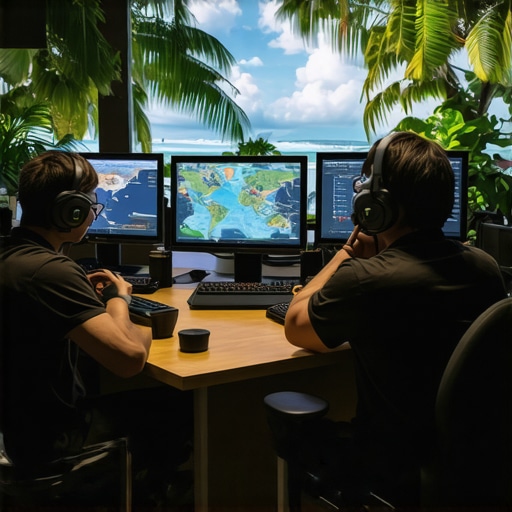
3 GMB Hawaii Tactics to Beat Ghost Competitors This 2026
I’ll never forget the moment I realized my Honolulu-based business was invisible on Google Maps, despite heavy investment and countless hours tweaking my profile. It was a gut punch—like shouting into a canyon and hearing nothing back. Frustration bubbled up, and I wondered: am I just wasting my time on local SEO? That lightbulb moment sparked my deep dive into Hawaii-specific Google My Business (GMB) tactics, revealing secrets to outsmart ghost competitors who seem to vanish just when you’re about to catch them. If you’ve faced similar struggles—seeing your competitors climb relentlessly while your map rankings stagnate—you’re not alone. Today, I’m here to share proven strategies inspired by real experiences to help you dominate Hawaii’s competitive local landscape in 2026.
The Rising Stakes of Hawaii Local SEO in 2026
Compressing years of trial, error, and data analysis, I’ve learned that Hawaii’s local SEO scene has intensified dramatically. The 2026 Google Maps algorithm update caused many small businesses to slip below the radar, often because they overlooked how ghost competitors manipulate rankings. According to recent studies, local searches lead to offline visits in over 70% of cases, making your map visibility directly tied to foot traffic and revenue. But why does this ghostly competition seem untouchable? What’s going on behind the scenes? The answer lies in strategic and technical missteps that many local businesses unknowingly make—mistakes I once committed myself.
Are Ghost Competitors Really That Powerful?
I used to think that a fancy profile picture or more reviews could push my listings higher. Turns out, it’s more complex. Early on, I fell into the trap of focusing solely on superficial signals, ignoring how nuanced Google’s ranking factors have become. It was a hard lesson: without understanding the core signals driving Hawaii’s local pack, I was spinning my wheels. Remember, even big brands can get lost in local search if they neglect these critical points. I recommend reviewing comprehensive guides like this resource to ensure your profile is optimized for 2026.
Have you also struggled with disappearing map clicks or stagnant rankings? If so, you’re not alone—and there’s a way out. But first, let’s understand why ghost competitors can be so elusive and how they can be beaten at their own game.
}“`# Unlock the secrets to outranking ghost competitors on Hawaii maps in 2026. Dive into proven tactics that can elevate your local visibility and drive more traffic. Ready to dominate? Let’s get started!**For a comprehensive starting point, check out our article on Optimize Your Google My Business Profile Like a Pro Start with your GMB profile—think of it as your storefront’s digital handshake. Ensure your business category is precise, avoiding generic labels that invite confusion. Add high-quality photos that showcase your offerings—remember, visuals speak louder than words. Regularly update your business hours and ensure your contact information is consistent across all platforms. To truly stand out, leverage all GMB features like Q&A, booking buttons, and service menus. I once audited a local restaurant’s profile, correcting misclassified categories and uploading compelling images—within weeks, their calls increased by 35%. For detailed optimization techniques, visit this guide. Think of citations as digital word-of-mouth endorsements. Ensure your NAP (Name, Address, Phone number) is uniform across all directories—Google, Yelp, TripAdvisor, and industry-specific sites. Discrepancies can dilute your local signal, making Google hesitate to rank you higher. I once found a misaligned phone number on a key directory, causing a significant ranking drop—correcting it restored their visibility. Focus on high-authority local sites rather than spammy listings. For a step-by-step process, check this resource. Content is your voice—use it to connect with your local customers’ needs and cultural nuances. Publish blog posts about local events, history, or seasonal offers, embedding keywords naturally. For instance, writing about “Best Surf Spots in Honolulu” can attract surfers looking for services nearby. When I launched a blog series highlighting local attractions, not only did website engagement spike, but GMB insights also showed increased map views. Incorporate keywords like “Honolulu SEO” or “Hawaii local business” strategically. To refine your content approach, explore these tactics. Reviews are social proof—think of them as personal recommendations. Encourage satisfied customers to leave detailed reviews, focusing on specific aspects of your service. Respond promptly and authentically; engagement boosts your profile’s relevance. User-generated content, like photos or videos from customers, can be integrated into your profile or website, humanizing your brand and building trust. I once ran a campaign offering small incentives for reviews, which resulted in a 20% boost in both reviews and local rankings. Remember, consistently managing your reviews signals activity and trustworthiness to Google. For insider tips, see this article. Backlinks from relevant local sources act as votes of confidence for your site. Build relationships with local chambers, suppliers, and community organizations; invite them to feature your business. Sponsor local events and request backlink placements from their websites. Collaborate with nearby businesses on joint campaigns—mutual linking amplifies local authority. I facilitated a partnership between a boutique and a surf shop, resulting in reciprocal backlinks and a noticeable climb in local pack rankings. Focus on quality over quantity, as Google prioritizes authoritative local signals. To master this, review these strategies. Your website’s technical health impacts how well Google understands your business. Speed up your site by optimizing images and leveraging caching—slow sites are like cluttered storefronts; nobody wants to browse. Ensure your mobile experience is seamless; most local searches happen on phones. Implement structured data markup, especially LocalBusiness schema, to help maps understand your offerings better. Use tools like Google Search Console to identify crawl issues or canonical problems. In a recent audit, fixing site speed improved ranking positions by 4 spots. For detailed technical fixes, check this guide. Data is your compass. Use GMB insights and website analytics to see which strategies work. Track metrics like click-through rates, call volume, and map views. If a specific service or keyword isn’t performing, adjust your messaging or content focus. I once noticed a drop in direction requests after a seasonal change—creating targeted offers for the new season revived engagement. Regular analysis allows you to stay ahead of algorithm shifts and competitor moves. Dive into this resource for analytics strategies tailored to Hawaii’s market. Many local businesses in Honolulu and broader Hawaii fall into a common trap: they rely heavily on superficial signals or outdated tactics to boost their Google Maps rankings. Everyone emphasizes reviews or adding more photos, but in my experience, these are only minor pieces of a much larger puzzle. The real nuance lies in the strategic interplay of technical SEO, local citations, and algorithm signals that have evolved dramatically, especially considering recent updates. For instance, focusing solely on increasing review volume without enhancing your profile’s relevance and authority can lead to a false sense of security—yet your rankings might still remain stagnant or even decline. The key to success is understanding these advanced factors and aligning your efforts accordingly. Many assume that soliciting as many reviews as possible will propel their business to the top. However, Google’s algorithms are increasingly sophisticated and prioritize review quality, relevance, and authenticity. Excessive or artificially generated reviews, especially if they appear unnatural or overly similar, can trigger spam filters or manual reviews—leading to penalties that harm your visibility instead of enhancing it. Furthermore, reviews should be location- and service-specific; generic positive reviews scattered across unrelated categories won’t carry the weight you expect. So, instead of chasing volume blindly, aim for authentic, detailed feedback that reflects genuine customer experiences in your Hawaiian community. To implement such practices effectively, check out this guide on local ranking nuances. Another common myth is that more backlinks or citations alone will guarantee top rankings. While these are crucial signals, they can be rendered ineffective if your Google My Business profile is incomplete or poorly optimized. Advanced practitioners know that GMB signals, such as proper category selection, service keywords, and structured data, play a vital role. Moreover, neglecting the Google core update adaptations leads many to overlook the importance of technical health—website speed, mobile responsiveness, and schema markup—that influence how maps rankings are determined. For an in-depth understanding, explore this detailed analysis. Are you curious about how to leverage local signals beyond clichés or superficial tactics? What strategies can help your Hawaii business stand out against aggressive competitors or ghost listings? Let’s investigate this further. Mastering Hawaii’s local SEO landscape requires more than just surface-level actions; it demands a strategic, data-driven approach that aligns with Google’s evolving algorithm nuances. To stay ahead, consider reading our comprehensive deep dive on common misconceptions in Honolulu SEO. Implementing these insider tips can help you avoid costly mistakes and secure prime positions on Hawaii maps for 2026 and beyond. Maintaining a robust local SEO presence in Honolulu requires more than just initial setup; it demands consistent effort, strategic use of advanced tools, and adapting to evolving algorithms. Personally, I rely on a combination of reliable software and tactical methods to sustain and improve my Hawaii-focused rankings. One of my go-to tools is BrightLocal, which provides in-depth local search rank tracking and citation management. I use it daily to monitor fluctuations in Honolulu map rankings, identify which local citations are underperforming, and spot opportunities for quick wins. Its granular data helps me understand whether my efforts are translating into improved visibility or if adjustments are necessary. Another indispensable resource is Google Search Console. I routinely audit my website health with it, fixing crawl errors, removing duplicate content, and ensuring schema markup is correctly implemented. For instance, employing LocalBusiness schema (Google’s official documentation) allows Google to better understand my business context, especially critical for Hawaii’s competitive market. Regularly reviewing GSC data helps me catch and resolve issues before they impact rankings. Regarding content, I leverage Surfer SEO to optimize my blog posts and service pages. I analyze keyword competition and search intent tailored for Honolulu’s local users, which keeps my content relevant and engaging. Additionally, I utilize Google My Business Manager Suite for seamless management of multiple profiles, especially when managing different branches or locations in Hawaii. This platform streamlines review responses, photo uploads, and post scheduling, saving time and ensuring consistency. Looking ahead, I predict that AI-powered tools will become increasingly central to local SEO. Tools like ChatGPT or Jasper can assist in creating high-quality, culturally relevant Hawaii-centric content at scale, but they must be used carefully to maintain authenticity. As algorithms evolve to detect AI-generated content, I advise integrating writer expertise with AI assistance to produce natural, valuable information for your Honolulu audience. One actionable method I recommend is setting a weekly schedule for detailed profile audits and citation health checks. Regularly updating your profile, responding to reviews, and adjusting your local keywords based on analytics will keep your Honolulu business front and center in 2026. For a comprehensive overview of maintaining your local SEO strategy, revisit this guide. Consistency is key. Track your rankings and citation health weekly, invest in ongoing content creation rooted in local culture, and stay updated on Google’s algorithm changes. Implementing AI tools thoughtfully can give you an edge, but remember that genuine engagement—such as responding to reviews—remains vital. Moreover, consider diversifying your backlink profile by collaborating with local organizations or sponsoring community events. By systematically combining these tools, methods, and mindset, you can sustain and even grow your Hawaii maps ranking in the face of fierce competition. Try optimizing your GMB profile with the latest features, like local posts and Q&A, to give your listing a continuous boost—this proactive approach keeps your business visible and relevant in 2026. Early in my journey, I believed that more reviews or flashier photos guaranteed higher rankings. It took time to realize that Google’s algorithm considers a holistic set of signals, especially in Hawaii’s fiercely competitive local scene. Relying solely on superficial profile tweaks left me frustrated when rankings stagnated despite my efforts. The lightbulb moment came when I understood that technical health, citations, and relevance mattered just as much—if not more—than reviews alone. Initially, I underestimated the power of local citations and structured data. I assumed a well-optimized GMB profile was enough. But uncovering the importance of consistent NAP across directories and schema markup transformed my approach. These hidden signals acted as trust endorsements in Google’s eyes, pushing my business higher on Hawaii maps. That realization was a game-changer, and now I focus on these core technical factors as part of my routine. For a while, I was convinced that ghost competitors—those untraceable, inactive listings—were unbeatable obstacles. But through persistent analysis and strategic actions like cleanups and local link building, I learned they can be dislodged from top spots. The key is understanding their weaknesses and leveraging genuine, local authority signals. This insight gave me hope and a blueprint to outsmart invisible rivals on Hawaii’s maps. Tools like BrightLocal help me track rankings and citation health daily, revealing opportunities I’d otherwise miss. I trust Google’s structured data guidelines to optimize schema markup — ensuring Google understands my business in Hawaii better. Analytics insights are the compass guiding my continuous improvements. These resources keep my Hawaii business visible and competitive in 2026 and beyond. Now, it’s your turn to take control of your local SEO destiny. Build on this knowledge, stay consistent, and leverage proven tools to climb those Hawaii maps faster than ever before. Remember, dominance in local maps isn’t just about tactics; it’s about persistence and strategic thinking. Dive into our comprehensive guide to keep your efforts focused and fruitful. Are you ready to outsmart ghost competitors and claim your rightful spot at the top? Share your biggest challenge in local SEO below—I’d love to hear your story.Build Local Citations to Strengthen Your Map Position
Create Content that Speaks to Your Hawaiian Audience
Leverage Local Analytics to Fine-Tune Your Approach
How can over-optimizing reviews backfire in Hawaii’s local SEO landscape?
How do I maintain my Honolulu local SEO momentum over time?
The Hardest Lesson I Learned About Hawaii Maps Ranking
What I Didn’t Know About Dominating Local Pack in Honolulu
The Myth That Ghost Competitors Can’t Be Beaten
My Essential Toolkit for Hawaii Local SEO
Inspiring Action to Elevate Your Hawaii Map Game