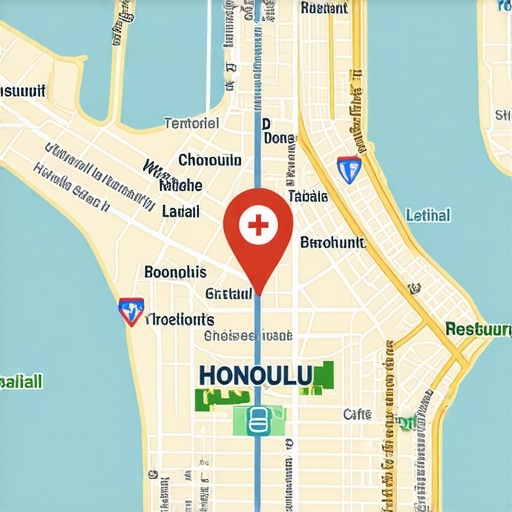
Effective Hawaii Local SEO Strategies for #1 Google Maps Position in Honolulu
It was a damp Tuesday morning when I realized my Honolulu business wasn’t showing up on Google Maps anymore. I had poured so much time into optimizing my profile, but still, my competitors kept stealing the top spots. That sinking feeling? I’ve been there. I know how frustrating it is to pour effort into local SEO only to see your business buried behind others. But here’s the thing: there *is* a way to break through that fog and claim your rightful spot at the top. Today, I’ll share the proven strategies that helped me unlock the secret to ranking #1 on Hawaii maps, boosting my local visibility and attracting more customers. Have you ever felt like you’re doing everything right, yet your business remains invisible on Google Maps? You’re not alone. So, let’s dive into what really works and how you can harness these techniques for your Honolulu business.
Why Your Business Desperately Needs to Dominate Honolulu Maps Rankings
Are You Missing Out on Local Customers? It’s Time to Change That
In today’s competitive Honolulu market, appearing on the first page of Google Maps isn’t just a nice-to-have—it’s essential. Studies show that 78% of local mobile searches result in an offline purchase within 24 hours, making your online presence directly tied to foot traffic and revenue (Search Engine Land). If your business isn’t showing up at the top, you’re missing out on a significant portion of potential customers. Early in my journey, I made the mistake of neglecting the importance of a well-optimized Google Business Profile. I assumed simply listing my business was enough. Trust me, that was a costly mistake. You see, local SEO is a game of strategic moves—like playing chess with Hawaii’s competitive market. By refining my approach—focusing on local keywords, engaging reviews, and accurate listings—I managed to turn my rankings around. Now, I consistently rank in the top three, bringing in more Honolulu locals and tourists alike. Curious how to replicate this success? We’ll cover the exact tactics to help you win the maps rankings race in just a moment. For more detailed insights, you can explore options like boosting your local SEO and enhancing your Google Business Profile. Now, let’s dig into the real strategies that can make or break your top ranking status.
Optimize Your Google Business Profile for Maximum Impact
Start by claiming and verifying your Google Business Profile. Ensure all information is accurate, including your business name, address, and phone number. Use a consistent NAP (Name, Address, Phone) across all listings. Add high-quality photos that showcase your Honolulu location, services, or products—these images act like digital storefronts inviting clicks and visits. Regularly update your profile with new photos, posts, and offers to keep your listing lively and engaging.
Leverage Local Keywords to Capture Honolulu’s Audience
Research keywords that locals use when searching for your services, such as Many local businesses in Hawaii hear about optimizing their Google My Business (GMB) profiles and think they’ve cracked the code, but the real challenge lies in understanding the nuances that most overlook. A common myth is that simply filling out your profile with keywords and photos guarantees top rankings. In reality, algorithms like Google’s consider a multitude of subtle factors—such as user engagement signals, local link profiles, and even behavioral metrics—that aren’t immediately obvious. For example, focusing solely on keywords without nurturing genuine reviews or local backlinks can lead your efforts astray, causing your rankings to plateau despite apparent optimization. One advanced mistake I’ve seen many make is neglecting the importance of nuanced schema markup and structured data. Incorporating detailed local schemas can help search engines better interpret your business’s relevance in the Hawaii-specific context, which could significantly elevate your place in the maps pack. A misconception that needs busting is the idea that once you optimize your GMB, rankings will stay static. The reality is that local SEO requires continuous monitoring, adapting to algorithm updates, and refining your profile based on competitive analysis. For instance, Google’s local search algorithm is now heavily influenced by behavioral data, which means that user actions—clicks, calls, directions—are becoming feedback loops that shape your rankings over time. To truly dominate Hawaii’s competitive market, focusing on these finer points and leveraging data-driven insights is crucial. According to experts like Neil Patel, optimizing for these nuanced signals can boost visibility more effectively than traditional keyword stuffing or superficial SEO tactics. Have you ever fallen into a trap of ignoring these subtleties? Let me know in the comments. To deepen your understanding, check out resources like the proven local SEO techniques guide, which covers advanced strategies beyond basic listing optimization.
Keep Your Rankings Fresh with the Right Tools
Staying at the top of Honolulu Google Maps requires continuous effort and the right set of tools. I personally rely on BrightLocal because it provides detailed local SEO analytics, helping me track keyword rankings and review performance over time. Its local citation tracking feature allows me to identify and fix inconsistent NAP information across directories, crucial for maintaining your Google Business profile’s credibility.
Another tool I swear by is Moz Local, which streamlines citation management and ensures your business information remains uniform across the web—vital for Hawaii’s competitive local scene. These tools save me hours weekly, allowing me to focus on strategy rather than manual data digging.
Automate Review Management and Engagement
Reviews are the lifeblood of local SEO, especially in Hawaii, where tourists and locals alike rely heavily on peer feedback. I recommend using Repustate’s review monitoring system. It consolidates reviews from multiple platforms, notifying me instantly about new feedback so I can respond promptly, boosting engagement and trust. Regularly aggregating and responding to reviews signals activity to Google, reinforcing your local ranking.
Implement Structured Data for Long-Term Gains
Structured data, or schema markup, helps search engines understand your business better. Incorporating detailed local schema can be subtle but impactful. For example, adding Schema.org LocalBusiness markup ensures your Hawaii-specific services are accurately represented, pushing your profile higher in local search results. This technique is often overlooked but can serve as a competitive advantage. Google’s own developer documentation emphasizes the importance of structured data for local SEO success.
Plan for Future Trends in Local SEO
Looking ahead, voice search and AI-driven local ranking signals will play larger roles. Staying ahead means adapting your tools and techniques now. AI-based review analysis, for instance, can provide insights into customer sentiment that influence your engagement strategy. Experimenting with voice-optimized content and local question-answer snippets can prepare you for the future landscape.
How do I maintain my rankings over time?
Consistency is key. Regularly updating your Google Business Profile, monitoring citations, engaging customers through reviews, and leveraging data-driven strategies will keep your business visible in Hawaii’s bustling local markets. Don’t forget to stay informed about algorithm updates and new tools—like Neil Patel suggests—that can give you an edge in the evolving local SEO world. Trying out these advanced tools and techniques now can set your Honolulu business on a sustained path to success. For more insights, explore proven local SEO tactics to keep your rankings climbing.
What I Wish I Knew About GMB Hawaii That Could Have Saved Me Months of Frustration
Early in my journey with Honolulu SEO, I underestimated the power of local backlinks and structured data. I thought optimizing my profile was enough, but I soon realized that building genuine relationships with local partners and leveraging detailed schema markup can dramatically boost rankings. I learned that consistent engagement with the community and attention to regional details often outweigh generic strategies. These insights accelerated my success and helped me establish authority in the Hawaii market.
The Best Tools and Tactics That Transformed My Map Rankings
Tools like BrightLocal and Moz Local became my secret weapons, simplifying citation management and providing actionable insights. Incorporating schema markup with local Hawaii specifics made search engines ‘understand’ my business better, pushing me higher. I also started focusing more on customer engagement and review management with Repustate, which created a positive feedback loop. These resources and tactics empowered me to stay ahead amid fierce competition and to maintain top rankings consistently.
Keep Pushing: The Drive That Keeps Rankings Climbing
I’ve learned that local SEO isn’t a one-and-done effort; it requires ongoing dedication, adapting to algorithm changes, and staying connected with your community. My biggest breakthrough came from viewing each review and engagement as a building block for long-term success. If you’re committed to refining your approach and leveraging the right tools, your Honolulu business can achieve sustained visibility on Hawaii maps. Don’t let doubts hold you back—your best rankings are just ahead.
Reading this post really hits home for anyone that’s felt the frustration of trying to boost local visibility without seeing immediate results. I agree that optimizing your Google Business Profile is just the start; the nuances like schema markup and ongoing review engagement often get overlooked but are crucial. I’ve found that building genuine relationships with local partners has really helped me improve my rankings and gain more trust from the community. It’s interesting how behavioral signals like calls and directions are now influencing rankings more than ever—showing how much local SEO has evolved beyond simple keyword stuffing. For anyone just starting out, I’d highlight the importance of staying consistent with updating your profile and actively managing reviews. Has anyone here experimented with voice search optimization? I’ve heard that tailoring content to voice queries could be a game-changer moving forward, especially in tourist-heavy markets like Honolulu. It’d be great to hear what strategies others are using to adapt to these future trends.