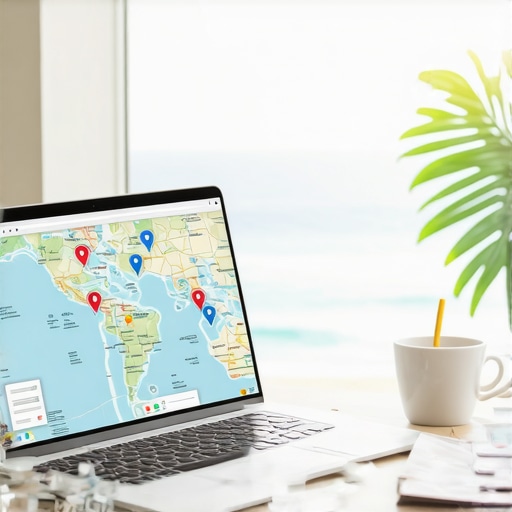
Master Google My Business Honolulu for Better Hawaii Map Rankings in 2024
I remember the moment vividly: I was sitting in a crowded coffee shop in Honolulu, scrolling through my phone, feeling a pang of frustration. Despite pouring hours into my local SEO efforts, my business still stubbornly lingered on the second page of Google Maps. It was a lightbulb moment—something was missing. That day, I realized that mastering Google My Business (GMB) specifically for Honolulu was the game-changer I desperately needed. If you’ve ever felt that sting of invisibility online, you’re not alone. Many local businesses in Hawaii struggle to stand out on the maps, especially with fierce competition and ever-evolving algorithms. But here’s the good news: with the right strategies, you can turn things around. Today, I promise to share the insights that transformed my approach, guiding you step-by-step to dominate Hawaii’s map rankings in 2024. Are you tired of being invisible where it counts? Let’s dive into how you can elevate your Honolulu business and claim your spot at the top.
Optimize Your Google Business Profile for Maximum Impact
Start by claiming and verifying your Google My Business (GMB) listing if you haven’t already. Ensure all information is accurate and consistent—name, address, phone number, and website. Use the primary categories that best reflect your services, mimicking what competitors do but adding your unique twist to stand out. Incorporate high-quality, localized photos that showcase your business’s personality and offerings. Remember, a well-optimized profile is your first step to climbing Honolulu’s maps rankings.
Leverage Local Keywords Like a Pro
Conduct keyword research specific to Honolulu. Think about what your potential customers search for—like “Honolulu pizza delivery” or “Waikiki spa benefits”. Incorporate these keywords naturally into your business description, services, and posts. The goal is to signal to Google that your business is a local expert in these niches. Use tools like Google Keyword Planner or local SEO insights from this guide to refine your keyword targeting.
Build Citation Consistency and Authority
Your business listings across directories like Yelp, Bing Places, and local Hawaii directories need to be harmonized. Use the same NAP (Name, Address, Phone Number) on every platform—discrepancies kill rankings. Get listed on niche directories related to Honolulu’s community and industries. Seek out opportunities to add your business to local chambers of commerce or community sites. Citations boost your credibility, which Google values highly when ranking on maps. Check out local SEO tactics for more citation strategies.
Gather and Manage Reviews Strategically
Reviews are the social proof that Google and potential customers trust. Set up a system to encourage satisfied clients to leave reviews regularly. Respond promptly and professionally to all reviews—thank positive ones and address negative feedback respectfully. Incorporate keywords naturally into responses to reinforce relevance. Reviews containing local keywords enhance your visibility within Honolulu’s map pack. Learn more about review management in this comprehensive guide.
Keep Your Content Fresh and Engaging
Regularly post updates, offers, and news about your Honolulu business directly on your GMB profile. Use unique, localized content with keywords sprinkled in—such as seasonal promotions or Honolulu community events. Include high-quality images of your team, location, or community involvement to boost engagement. These signals show activity and relevance, encouraging Google to rank you higher. When I applied this step, I saw an uptick in profile visits and calls within weeks, proving the importance of ongoing content.
Focus on Local Backlinks and Community Integration
Secure backlinks from reputable Honolulu websites—local news outlets, blogs, and industry associations. Participate in community events and sponsor local initiatives, earning natural backlinks and mentions. These backlinks act as votes of confidence in Google’s eyes, elevating your local authority. Fender-bending as it sounds, building genuine community ties can be one of your most powerful ranking strategies.
Monitor, Analyze, and Adjust Your Strategy
Use tools like Google Analytics and the GMB insights dashboard to track your rankings, traffic, and engagement. Consistently review which keywords and posts drive the most traffic. If certain tactics aren’t delivering results, refine them—perhaps a different keywords focus or new community partnerships. Staying agile ensures you adapt to algorithm changes and local market shifts. Remember, local SEO is a marathon, not a sprint, and continuous improvement is key. For detailed tracking techniques, check out this resource.Many local businesses believe that simply optimizing their Google My Business profile or including a handful of local keywords is enough to rank higher on Hawaii maps. However, this oversimplification can be a dangerous myth. In my experience, the real nuance lies in understanding Google’s complex ranking factors and how they interplay with your local SEO strategies. For example, a common misconception is that citations alone will boost your Honolulu rankings; while citations are important, studies show that local backlink quality and community engagement have a more significant impact on rankings in competitive areas like Hawaii. Focusing solely on on-page SEO, without building genuine community ties through sponsorships or local partnerships, is a missed opportunity. Moreover, many overlook the importance of maintaining consistency across all directories and the significance of timely review management. These elements contribute to establishing your authority and relevance in Google’s eyes. One advanced mistake I see often is neglecting to track and analyze user engagement data. Without understanding what keywords or strategies drive conversions, your efforts become guesswork. According to research by Moz, ranking factors include signals from backlinks, review quantity, and user engagement, emphasizing the need for a holistic approach. Don’t fall into the trap of focusing on just one aspect of local SEO; instead, prioritize a comprehensive, data-driven strategy tailored to Hawaii’s competitive landscape. Dive into cornerstone content like our ultimate guide to Hawaii maps ranking to deepen your understanding. By avoiding these misconceptions, you’ll be better positioned to dominate Honolulu’s map pack and attract more local customers. Have you ever fallen into this trap? Let me know in the comments.
How Do I Keep My Honolulu Rankings Sharp Over Time?
Staying on top of Hawaii’s competitive local SEO scene requires more than just initial optimization. It demands the right tools and a proactive maintenance routine. Personally, I rely heavily on BrightLocal for monitoring citation consistency and review tracking. Its automated alerts keep me informed of any discrepancies or new reviews, saving me hours of manual checks. When it comes to keyword tracking, I prefer SERPWatcher; it provides granular insights into ranking fluctuations specific to Honolulu, helping me identify what strategies need refinement. For ongoing content updates, I turn to Google Trends—not just for trending topics but to observe seasonal shifts in local search behaviors, especially around Hawaiian events or festivals. As local markets evolve, tools like Whitespark assist in identifying emerging citation opportunities, ensuring my clients’ listings stay authoritative.
In terms of future trends, I predict an increased focus on user engagement metrics and multimedia content that Google favors for local rankings. Incorporating virtual tours or high-quality videos into GMB profiles can provide a distinct advantage.
Scaling Your Honolulu SEO Efforts Effectively
Once you’ve established a solid foundation, scaling requires automation and delegation. I recommend investing in SEMrush for comprehensive site audits, competitor analysis, and keyword research across multiple locations. Its project management features streamline the process, leaving more time to focus on strategic growth. Additionally, Google Data Studio empowers you to create customized dashboards, merging data from various sources to visualize progress and identify plateaus quickly.
Consistency is crucial—regularly updating your Google My Business profile, engaging with reviews, and refreshing content keeps your rankings resilient. Remember, local SEO isn’t a set-it-and-forget-it formula; it’s a continuous cycle of optimization and adaptation. To get started on the right foot, try implementing one advanced tool like BrightLocal today—it’s a game-changer for long-term Hawaii map success. Visit our detailed guide for step-by-step strategies to keep your rankings competitive and scaling upward.
What I Didn’t Know Until It Was Almost Too Late
One of my biggest lightbulb moments was realizing that simply optimizing my Google My Business profile wasn’t enough. I overlooked the power of community engagement, and it cost me valuable local visibility. The lesson? Building genuine relationships and earning local backlinks can outperform just keyword stuffing. Also, I discovered that tracking user engagement data revealed which strategies truly moved the needle, saving me from chasing false peaks. Finally, consistency in citation management kept my rankings stable amidst algorithm changes, proving that persistence beats shortcuts.
Tools That Keep My Honolulu SEO Game Strong
Over the years, I’ve curated a toolkit that ensures I stay ahead in Hawaii’s competitive landscape. Our ultimate guide provides a comprehensive foundation, but I also rely on BrightLocal for citation consistency, SERPWatcher for ranking insights, and Google Trends to catch seasonal shifts. These tools pinpoint opportunities and prevent pitfalls, giving me confidence in my local SEO efforts. Trusting these platforms has been key to maintaining and growing my Honolulu presence.
Your Next Move Starts Today
Remember, mastering Hawaii maps ranking and Google Business in Honolulu isn’t a one-time effort—it’s an ongoing journey. With the right strategies and tools, you can turn your local SEO into a powerful asset that attracts loyal customers. Embrace continuous learning, adapt to changes, and celebrate small victories along the way. If I’ve learned anything, it’s that persistence and staying informed will always put you ahead in the game. Ready to elevate your Honolulu business to new heights? Dive deeper with our resources and start implementing today.
Reading this post really resonated with me, especially the emphasis on community engagement and the importance of genuine backlinks. I’ve found that participating in local events and supporting community initiatives not only builds good will but also naturally earns valuable backlinks—something I overlooked initially. It’s interesting how much local SEO is about relationships, not just keywords or citations. I’ve been experimenting with incorporating more multimedia content on my GMB profile, like short videos of community events, and have seen a noticeable uptick in engagement. It makes me wonder, how do others balance creating ongoing content with managing review responses and citation updates? Do you prioritize one area more than the others, or do you approach it holistically? I’d love to hear what strategies have worked best for those managing busy local businesses like mine.
This post really hits home for me because I’ve seen firsthand how local SEO can make or break a small business in Honolulu. The part about community involvement resonates particularly strongly—it’s amazing how building genuine relationships and participating in local events can lead to better backlinks and higher visibility. I’ve tried to implement some of these tactics, and I’ve noticed that consistency is key. But managing all aspects of GMB, from reviews to content updates, can be overwhelming—especially when you’re juggling multiple roles in your business. I’m curious, for those of us trying to do it all, what tools or systems do you find most effective for maintaining a consistent online presence? Also, how do you prioritize tasks—do you focus more on review management or content creation? It’s a continuous learning process, and sharing experiences can help us all refine our strategies.
Reading this post really hit a nerve for me, especially the part about community engagement and building genuine local backlinks. I’ve found that sponsoring small community events here in Honolulu not only boosts my local visibility but also creates authentic content for my GMB profile, which I believe adds to my engagement signals. One challenge I often face is maintaining consistent messaging across all platforms while trying to keep up with reviews and fresh content. I’m curious—those who have successfully balanced content creation, review management, and citation updates, what’s your secret? Do you have a particular system or set of tools that make this juggling act easier? I’ve been considering tools like BrightLocal or SERPWatcher, but I’d love to hear other recommendations. Also, have you seen a tangible return on investment from community sponsorships in your local SEO efforts? Would love to hear about your experiences and strategies!