
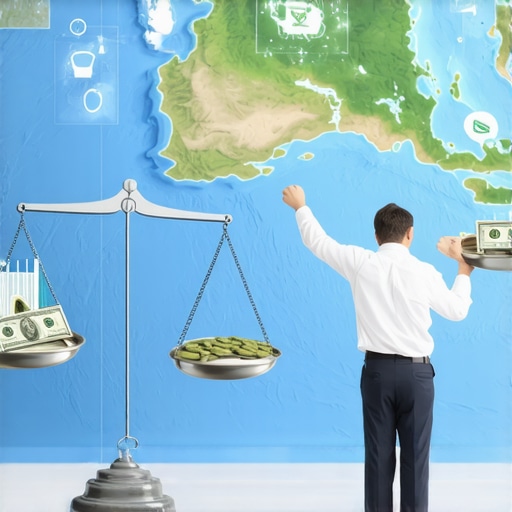
Why Mainland SEO Strategies Cost Hawaii Businesses More Than They Make
If you own a business in Hawaii, you’ve likely received dozens of cold calls from “expert” agencies based in Los Angeles, New York, or Chicago. They promise the world: page-one rankings, thousands of leads, and a “proven system” that works for businesses across the country. But here is the reality that most Hawaii business owners learn the hard way: there is a hidden “Mainland Tax” associated with these services. This tax isn’t paid to the government; it’s the thousands of dollars in lost ROI when you apply generic, mainland-style local seo services to the unique landscape of the 808.
In Hawaii, business is conducted differently. Our culture values ‘ohana (family) and pono (balance and righteousness). When a local seo agency from the mainland tries to apply aggressive, high-pressure digital tactics to a Honolulu-based plumbing company or a Maui boutique, the result is a fundamental disconnect. You aren’t just losing money on the monthly retainer; you are potentially damaging your brand’s reputation in a community where word-of-mouth is still the ultimate currency. To truly succeed here, your google business profile seo must reflect the local values and geographical realities of the islands, not a template designed for a suburb in Ohio.
The Cultural Mismatch: Why “Hard Sell” Copy Fails in the Islands
Mainland marketing is often built on a foundation of urgency and aggression. “Limited Time Offer!”, “Call Now or Miss Out!”, and “We Are the #1 Rated!” are the standard refrains. While these might work in a fast-paced metropolitan environment on the continent, they often fall flat in Hawaii. Why relying on mainland SEO strategies fails Hawaii businesses every time is rooted in a lack of cultural nuance. Hawaii is a relationship-based economy. People want to know who you are, who your family is, and if you operate with pono.
When a mainland agency handles your google business profile optimization, they often use AI-generated or generic copywriting that feels “off” to a local ear. It’s too polished, too corporate, and entirely devoid of the local spirit. For instance, using overly formal language or, worse, butchering ʻŌlelo Hawaiʻi (the Hawaiian language) in an attempt to look “local” is a massive red flag. Automated content tools often misplace kahakō or ʻokina, which signals to a local customer that the business is either not truly local or doesn’t care enough to get the details right. In a community as tight-knit as ours, that loss of trust is a conversion killer that no amount of “high-authority backlinks” can fix.
Furthermore, the “Hard Sell” fails because Hawaii consumers value authenticity over flashy promises. If your Google Business Profile (GBP) is filled with aggressive sales posts instead of community engagement and authentic local stories, you’re not building a brand; you’re just making noise. True google business profile seo in Hawaii requires a soft touch and a deep understanding of the local social fabric.
The Proximity Paradox: Why “Hawaii-wide” is Too Broad
One of the biggest mistakes mainland agencies make is treating “Hawaii” as a single, homogenous market. To an SEO strategist in a skyscraper in Dallas, ranking a business for “Hawaii [Service]” seems like the ultimate goal. However, locals don’t search that way. We search by neighborhood. We look for a mechanic in Kalihi, a bakery in Kaimuki, or a contractor in Ewa Beach. If your agency isn’t focusing on hyperlocal SEO, you are missing the most valuable traffic available.
The “Proximity Paradox” refers to the fact that while Hawaii is geographically small, the travel time and local loyalty are highly localized. Proximity is currently the #1 ranking factor in the Google Map Pack. If you want to rank higher on google maps, you need a strategy that targets the specific micro-markets where your customers actually live and work. A mainland agency might optimize your site for “Honolulu,” but if your shop is in Hawaii Kai, you’re competing for traffic that might not want to fight the H-1 traffic to get to you.
To dominate the local map pack seo, you need to understand the nuances of island geography. This includes optimizing for local landmarks, neighborhood names, and even local slang for certain areas. A google maps ranking service that doesn’t understand the difference between the Windward and Leeward sides is fundamentally incapable of delivering a high ROI. The simple move to keep your Honolulu shop visible in local map packs involves more than just setting a service area; it requires building local relevance through neighborhood-specific content and citations that mainlanders simply don’t know exist.
Technical Failures: False Wins and Mainland Software
Many Hawaii business owners are shown monthly reports by their mainland agencies that look fantastic on paper. The graphs are green, the rankings are “up,” and the agency claims victory. Yet, the phone isn’t ringing. Why? Because standard rank trackers often lie to Hawaii business owners. Most local seo tools or a generic google maps rank tracker use data centers or IP addresses that don’t accurately reflect the mobile search experience of someone standing on Beretania Street.
We see this constantly: an agency shows a “Rank #1” result for a keyword, but that ranking only exists for a searcher located in a very specific, non-representative spot – or worse, it’s a “false win” generated by a tracker that doesn’t account for the localized nature of Hawaii’s search results. Why Your Map Ranking Software Is Showing You False Wins is a technical hurdle that requires local verification. If your agency isn’t using specialized GMB ranking tools that can pinpoint search results down to the street corner in Honolulu, they are giving you a distorted view of your digital presence.
Furthermore, as we move into 2026, Google’s AI filters are becoming incredibly sophisticated at catching “fake” mainland-style optimizations. Tactics like keyword stuffing in business names or using virtual offices to “spoof” proximity are being penalized at record rates. Mainland agencies often use these “black hat” or “grey hat” shortcuts to show quick results, but when the hammer drops, it’s the local Hawaii business that loses its entire digital footprint. Authentic, local-first technical SEO is the only way to ensure long-term stability.
The Visual Disconnect: Stock Photos vs. Real Island Presence
Nothing screams “I hired a cheap mainland agency” louder than a Google Business Profile filled with stock photography of mainland oak trees, brick buildings that don’t exist in the islands, or people wearing winter coats. This visual disconnect is a major reason Why Generic Photos are Tanking Your Honolulu Google Map Ranking. When a potential customer sees a photo that clearly wasn’t taken in Hawaii, their subconscious trust in that business evaporates.
Google’s Image Recognition AI is now advanced enough to identify the difference between a monkeypod tree and a mainland maple. If your google business profile optimization strategy includes uploading generic stock photos, Google knows you aren’t providing a “helpful” or “authentic” experience for the user. This can lead to lower rankings in the Map Pack because Google prioritizes businesses that provide real, localized visual data.
To improve google maps ranking, you must use high-quality, original photos of your actual work, your actual team, and your actual location in Hawaii. Show the mountains in the background; show the local architecture; show your team in aloha shirts. These visual cues tell both the customer and the search engine that you are a legitimate part of the Hawaii community. A mainland agency can’t do this for you – they don’t have the “boots on the ground” to capture the essence of your business.
2026 Local SEO Ranking Factors: The Hawaii Edition
The landscape of search is shifting. As we look toward the 2026 ranking environment, the “Helpful Content” update has evolved to prioritize three main pillars: **Relevance, Proximity, and Prominence**. In Hawaii, these pillars take on a specific meaning. Relevance isn’t just about keywords; it’s about cultural and geographical context. Prominence isn’t just about how many backlinks you have; it’s about how much the local community interacts with your brand online.
One of the most significant shifts is how Google handles local search intent. 5 Honolulu SEO Fixes for the 2026 ‘Helpful Content’ Map Shift highlights the need for businesses to move away from “SEO-first” content and toward “Human-first” content. This means your website and GBP need to answer the specific questions Hawaii residents have. For example, a local plumber shouldn’t just rank for “clogged drain”; they should have content about “dealing with salt-water pipe corrosion in Honolulu” or “emergency plumbing for Ewa Beach monsoon season.”
Additionally, Google is placing more weight on “Business Operating Hours” and real-time availability. If your mainland agency hasn’t updated your holiday hours for Prince Kūhiō Day or King Kamehameha Day, Google sees that as a sign of neglect. Utilizing google maps lead generation tools that allow for real-time updates and local engagement is essential. To rank google business profile effectively in 2026, you need a strategy that is as dynamic as the islands themselves, reacting to local events, weather, and cultural moments.
Actionable Checklist: Auditing Your Current Strategy
If you are currently working with a mainland agency or a generic google maps optimization service, it’s time for a “local audit.” Use this checklist to see if your current strategy is actually working for you or if it’s just draining your budget:
- Check Your NAP: Is your Name, Address, and Phone Number (with the 808 area code) consistent across the web? Mainland agencies often overlook local directories like the Hawaii Chamber of Commerce or local niche blogs.
- Review Management: Are you responding to reviews with local flavor? The Review Response Strategy That Actually Moves the Needle for Hawaii Map Rankings involves more than just saying “Thanks for the review.” It involves mentioning the specific neighborhood or local service provided.
- Audit Your Photos: Delete every single stock photo. Replace them with authentic shots of your business in Hawaii.
- Hyperlocal Content: Does your website mention specific streets, landmarks, or neighborhoods? If it just says “Hawaii,” you’re too broad.
- Local Citations: Are you getting links from other .hi.us or Hawaii-based websites? These are worth ten times more than a high-DA link from a random blog in Florida.
Performing a google business profile audit through a local lens will often reveal why your rankings have plateaued. By focusing on a local seo checklist that prioritizes island-specific factors, you can stop the “Mainland Tax” and start seeing a real return on your marketing investment.
Conclusion: Reclaiming Your Island Authority
The “Mainland Tax” is a choice. You can continue to pay for generic packages that treat your Hawaii business like just another data point in a national database, or you can embrace a strategy that understands the heart and soul of the islands. The ROI of local expertise is found in the phone calls from neighbors, the trust of the community, and a dominant presence in the local Map Pack that actually translates to revenue.
Stop wasting your budget on “Anywhere, USA” marketing. It’s time to reclaim your island authority and show Google – and your customers – that you are the premier choice in your neighborhood. If you’re ready to see the difference that a truly local strategy can make, it’s time to pivot. Contact Us today for a comprehensive local audit or to Unlock Local SEO Secrets for Hawaii’s Competitive Market. Let’s make sure your business isn’t just “online,” but is a thriving, visible part of our 808 community.