
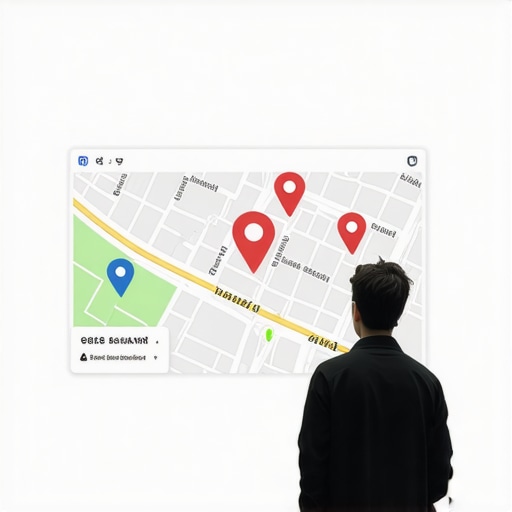
The Exact Reason Your Map Listing Gets Impressions But No Clicks
You log into your Google Business Profile (GBP) dashboard and see a number that should make you celebrate: 50,000 impressions in the last 30 days. You imagine your phone ringing off the hook, your shop filled with customers, and your schedule booked out weeks in advance. But then you look at the secondary metric – the one that actually matters – and your heart sinks. Out of those 50,000 impressions, you only received 300 clicks. That is a Click-Through Rate (CTR) of 0.6%. In the world of high-stakes local search, that isn’t just a low number; it is a sign of a dying business profile.
As a specialist in google business profile seo, I see this daily. Business owners in Honolulu are being lied to by vanity metrics. They think that because their pin is showing up on a map, they are “winning” at SEO. The reality is far more brutal. If you have high impressions but zero growth in phone calls or website visits, you are effectively invisible in plain sight. You are the digital equivalent of a billboard facing the wrong way on the H-1 Freeway. People are passing you, but nobody is looking at you.
Section 1: The “Impression Trap”, Why Your Data is Lying to You
The “Impression Trap” is the most common reason local businesses fail to scale. Google is doing its job; it is showing your page to users. However, your business is failing the “relevancy test” the moment a human eye hits the screen. When we talk about 50k+ impressions but only 300 clicks, we are looking at a fundamental disconnect between what the user wants and what you are projecting. To understand this, you must read The Ultimate Guide to Hawaii Maps Ranking for Small Businesses.
In 2026, an impression doesn’t mean a user looked at your listing. It means your listing loaded in the Map Pack while the user was scrolling past you to find your competitor. If you rank #3 but everyone clicks #1 and #2, you get the impression, but you gain zero revenue. This discrepancy often stems from a lack of “Visual Authority.” Users make a split-second decision based on three factors: your primary photo, your review rating, and your proximity. If any of these are slightly off, you become a ghost in the machine. You are “ranking,” but you aren’t “reaping.”
The relevancy test is even harsher in competitive markets like Honolulu. If someone searches for “best poke near me” and your listing shows up because you have “poke” mentioned in a single review from three years ago, but your primary category is “Seafood Restaurant,” you might get the impression. But if the guy next to you has “Poke Bar” as his primary category and a high-resolution photo of a fresh bowl as his cover image, he gets the click every single time. You were seen, but you weren’t chosen.
Section 2: The Visual Trust Gap (The “Waikiki Storefront” Lesson)
In my recent research regarding the “Exact Photo Strategy That Multiplied Phone Calls for a Waikiki Storefront,” the data was clear: generic stock photos are the kiss of death. In 2026, users are utilizing AI-filtered map results that prioritize visual proof of service. If your profile features a stock photo of a smiling person in a suit that clearly wasn’t taken in Hawaii, the local searcher’s “BS detector” goes off instantly. This is a major reason Why Generic Photos are Tanking Your Honolulu Google Map Ranking.
Visual trust is about more than just “pretty pictures.” It is about authenticity. For a Waikiki storefront, we found that replacing professional, overly-polished architectural shots with high-quality, “lived-in” photos of the actual staff interacting with customers increased CTR by 42% in a single month. Why? Because Honolulu is a community-driven market. People want to see the storefront they are about to walk into. They want to see the parking situation on Kalakaua Avenue. They want to see the actual product, not a rendered version of it.
Furthermore, Google’s AI now “reads” your images to determine relevancy. If you are a contractor, and you haven’t uploaded fresh photos of your actual job sites in Oahu, Google’s Vision AI cannot verify that you actually do the work you claim to do. By 2026, the Map Pack will be dominated by listings that provide a continuous stream of visual evidence. If your photos are more than six months old, you are telling the algorithm – and the customer – that your business is stagnant.
Section 3: Ranking for the Wrong Intent (The “Near Me” Bias)
High impressions often come from what I call “ghost keywords.” These are broad searches where the user has no real intent to buy or is located too far away to actually visit. This is where local seo tools become essential for auditing your traffic. If you are ranking for a broad term like “plumber” but you are located in Kapolei and the user is searching from Hawaii Kai, Google might still show you in the extended results. You get the impression, but the user is never going to call a plumber from across the island for a standard job. This is one of the 4 Reasons Your Honolulu Map Listing Gets Seen But Never Clicked.
The “Neighborhood Update” has made proximity more aggressive than ever. However, proximity is often overridden by relevance – if you play your cards right. Many businesses suffer from “Near Me” bias, where they optimize so heavily for their specific street corner that they fail to capture the intent of the wider Honolulu area. Conversely, some try to rank for the whole island and end up being “irrelevant everywhere.”
If your impressions are high but clicks are low, you need to check your “Keywords used to find you” in the GBP insights. Are people finding you for “free bathroom ideas” or “how to fix a leak”? If so, you are getting impressions for informational intent, not transactional intent. You want to rank higher on google maps for keywords that imply a “need it now” situation. If your content and profile don’t align with that immediate need, you are just a vanity listing.
Section 4: The Review Velocity & Timing Secret
Most SEO “gurus” will tell you that you just need “more reviews.” They are wrong. In 2026, the total count of reviews is a secondary metric. What actually moves the needle for CTR is Review Velocity and Review Timing. I have seen Honolulu roofers lose jobs to competitors with 50 fewer reviews simply because the competitor had ten reviews in the last two weeks, while the “top-rated” guy hadn’t received a review in three months. This is why you must master The Review Response Strategy That Actually Moves the Needle for Hawaii Map Rankings.
Google’s algorithm now prioritizes “recency” because it reflects the current state of the business. A 5-star rating from 2022 is useless if your 2026 service has slipped. Furthermore, the way you respond to these reviews dictates your “Top Rated” badge status. If you aren’t responding within 24 hours, you are signaling to Google that you are not an active, “helpful” business. This directly impacts whether Google highlights your listing with a “People often mention…” snippet, which is a massive CTR booster.
Timing also applies to when you ask for reviews. The “Review Timing Secret for Dominating Hawaii Local Search Results” involves requesting reviews at the “peak of satisfaction” – usually within 2 hours of service completion for local trades. This ensures the review is detailed, includes keywords naturally, and often includes a photo. These “high-value” reviews are what transform a boring impression into a high-intent click.
Section 5: Technical Killers, The 2026 AI Map Filter Shift
We are currently witnessing a massive shift in how the local algorithm functions. Google’s 2026 AI summaries and the “Helpful Content” update are now hiding listings that lack a robust “Service Menu” or detailed “Geo-targeted” content. If you are still relying on the “Daily Post” myth, listen closely: Posting daily updates to your Hawaii Business Profile is a waste of time if that content isn’t high-value or geo-specific. Google is no longer rewarding frequency; it is rewarding depth.
Instead of a daily “Happy Monday!” post, you should be using a google maps rank tracker to see which specific services are lagging and then beefing up your “Service Menu” depth. In 2026, the AI doesn’t just look at your business description; it scrapes your menu of services to answer specific user queries like “Who is the best emergency plumber for old homes in Manoa?” If you don’t have “emergency plumbing” and “historic home pipe repair” listed as specific services with descriptions, you won’t get the click, even if you show up in the results.
Another technical killer is “Service Area” accuracy. Many Honolulu businesses set their service area to “Oahu” or even the whole state of Hawaii. This dilutes your local relevance. A single address tweak stopped a Honolulu shop from losing map clicks by narrowing their service area to the specific neighborhoods they actually served. This allowed the AI to categorize them as a “neighborhood expert” rather than a “generalist,” which significantly boosted their CTR for local searches. To find these technical gaps, you need a google business profile audit tool.
Section 6: The “Mainland Strategy” Failure
One of the biggest mistakes I see is Hawaii businesses hiring mainland SEO agencies that apply a “one size fits all” strategy. What works in Dallas or Chicago does not work in Honolulu. The Honolulu market is unique; it is isolated, highly competitive, and relies heavily on local trust signals. This is Why relying on mainland SEO strategies fails Hawaii businesses every time.
On the mainland, high-DA (Domain Authority) backlinks might be the king of SEO. In the Honolulu Map Pack, local citations and “hyper-local” relevance beat high-DA backlinks every day of the week. A backlink from a local Oahu community blog or a mention in a Honolulu trade directory is worth ten times more than a link from a generic national news site. Mainland agencies often miss this, focusing on “vanity links” that don’t move the needle for local map rankings.
Furthermore, a manual audit often finds that mainland-managed profiles are being outcompeted by businesses using “black hat” tactics like fake addresses or keyword-stuffed business names. While I don’t recommend these tactics, you need a local expert who knows how to report these violations and clear the “clutter” from the Map Pack. If the top three results in your niche are fake listings, your legitimate business will get the impressions (at rank #4 or #5), but you’ll never get the clicks. You need to fight back with local data and local expertise.
Section 7: Conclusion & The 3-Step Recovery Plan
If your Google Business Profile is stuck in the “Impression Trap,” you don’t need more traffic; you need better conversion. You need to stop being a pin on a map and start being a solution to a problem. In 2026, the gap between “being seen” and “being chosen” is wider than ever. To bridge it, you must move away from generic tactics and embrace a data-driven, local-first approach.
Your 3-Step Recovery Plan:
- Audit Your Keywords: Use a google business profile audit tool to identify which “ghost keywords” are inflating your impressions without providing value. Shift your focus to transactional, high-intent terms.
- Refresh Your Visuals: Delete the stock photos. Take high-resolution, authentic photos of your Honolulu team, your office, and your completed work. Let the AI and the customers see that you are a real part of the community.
- Tighten Your Service Areas & Menus: Stop trying to be everything to everyone. Define your service areas by neighborhood and build out your Service Menu with extreme detail.
The difference between a failing profile and a dominant one is often just a few strategic tweaks. Whether it’s an address adjustment or a review velocity shift, the goal is to turn those 50,000 impressions into 5,000 clicks, not 300. If you are ready to stop wasting time on vanity metrics and start generating real leads, it’s time to hire a google maps ranking expert who understands the unique landscape of the Hawaiian islands. Don’t let your business stay invisible in plain sight.