
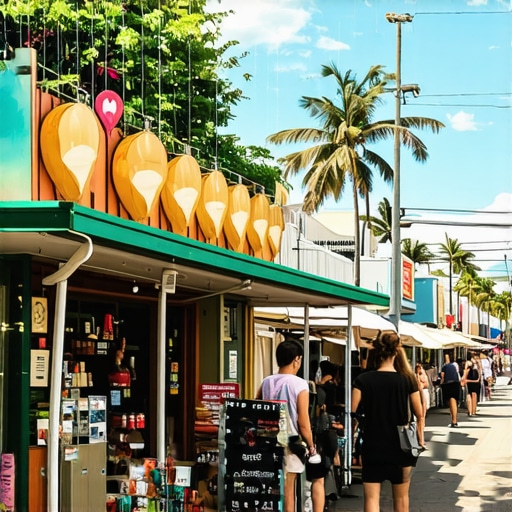
The Specific Local Signals That Tell Google Your Hawaii Shop Deserves the Top Spot
If you are running a business in Hawaii, you already know that the “Island Rules” apply to almost everything – from how we drive on the H-1 to how we conduct business in our local communities. But many Hawaii business owners don’t realize that these same local nuances apply to the digital world, specifically to how Google decides who shows up at the top of the Local Map Pack. My name is Leigh Trask, and after years of navigating the unique landscape of Hawaii digital marketing, I’ve seen firsthand how mainland-centric SEO strategies often fall flat when they hit our shores.
In the mainland, “Proximity” is often the king of local search. If you’re a mile away from a pizza shop, you see that shop. But in Honolulu, where geography is dense and traffic patterns are dictated by everything from the Honolulu Rail Transit Project to the natural barriers of the Koʻolau Range, Google has had to get smarter. For Hawaii businesses, “Prominence” and “Relevance” often override simple physical distance. Understanding these specific local signals is no longer optional; it is the difference between a ringing phone and a silent storefront. In fact, data shows that Maps Pack visibility accounts for roughly 50% of all inbound calls for local service businesses today. If you aren’t in those top three spots, you are effectively invisible to half your potential market.
Section 1: The GBP Foundation – More Than Just a Listing
The first signal Google looks for isn’t your website; it’s your Google Business Profile (GBP). Think of your GBP as your digital storefront. While many business owners treat it as a “set it and forget it” task, a truly optimized profile is a dynamic asset. For google business profile seo, the foundation starts with your primary and secondary categories. Choosing “Plumber” is easy, but are you also listed under “Drainage Service” or “Emergency Service”? These secondary categories are the hooks that catch long-tail searches from residents in Manoa or Hawaii Kai.
However, Hawaii presents a unique challenge: the “Possum” update. This Google algorithm update was designed to filter out duplicate listings, but it often penalizes businesses in multi-tenant buildings – a staple of downtown Honolulu and the various “Professional Centers” across the islands. If you are a CPA in a building with ten other CPAs, Google’s filter might see you all as the “same” entity due to the shared address. To combat this, your profile must be more complete and active than your neighbors’. This means having a unique suite number, a localized phone number (808 is non-negotiable), and a constant stream of updates. A complete and active profile is the baseline for google business profile optimization. Without it, you are fighting an uphill battle against the filter.
Many local shops fall into the trap of using generic descriptions. To stand out, you need to avoid the exact Google Business Honolulu profile errors that lead to filtering. This includes ensuring your Name, Address, and Phone number (NAP) are identical across the web, but also ensuring your GBP attributes reflect the “Hawaii-ness” of your business – such as “locally owned” or “kama’aina discounts.”
Section 2: Proximity, Relevance, and the Honolulu Rail Factor
Google’s local ranking algorithm relies on three pillars: Proximity (how close you are), Relevance (how well you match the search), and Prominence (how important you are). In Hawaii, the Honolulu Rail Transit Project has fundamentally altered the “Proximity” pillar. As construction shifts traffic and makes certain areas harder to access physically, Google’s AI has begun to weigh “Relevance” and “Prominence” more heavily to ensure users find businesses that are actually open and accessible, despite the detours.
If your business is located near a major construction zone, your physical proximity might actually become a temporary hurdle if users are avoiding that area. To counter this, you need a high-quality google maps ranking service strategy that emphasizes your relevance to the searcher’s intent. For example, if you are a dentist near the rail construction, your GBP and website should explicitly mention how to find your parking entrance during construction phases. This tells Google that you are a relevant, active solution for the user, regardless of the physical barriers.
Remember, why your business address isn’t the only factor in Honolulu map success comes down to how well you signal your area of influence. Google doesn’t just look at where your office is; it looks at where you do business. Service Area Businesses (SABs) in Hawaii – like contractors or mobile detailers – must define their service areas by zip codes and neighborhoods to show Google they cover the entire island of Oahu, not just the area around their home office in Kapolei.
Section 3: Hyperlocal Content – The “5 Honolulu Mentions”
Google’s AI has moved beyond simple keyword matching. It now uses “entities” to understand the context of a business. To rank higher, you need to signal “Hawaii-ness” through hyperlocal content. I call this the “5 Honolulu Mentions” strategy. Google’s Vision AI and Natural Language Processing (NLP) are looking for specific local landmarks and neighborhood names to verify that you are a legitimate part of the local fabric.
Don’t just say you serve “Honolulu.” Be specific. Mention Kaka’ako, Manoa, Waikiki, Kalihi, and Salt Lake. When you write blog posts or update your GBP, mention local events or landmarks. For example, “Located just three blocks from the Neal S. Blaisdell Center” or “Serving families near the Manoa Falls trailhead.” These mentions act as geo-coordinates for Google’s algorithm, moving your map pin faster than traditional backlinks ever could. You can use local seo tools to track which of these neighborhood-specific keywords are driving the most traffic to your competitors and then outperform them.
Creating service area pages that mention specific local events – like the Honolulu Marathon or the Prince Kuhio Parade – further signals your local authority. This is the essence of 5 Honolulu specific mentions that move your map pin faster than backlinks. It’s about building a digital footprint that is unmistakably tied to the 808.
Section 4: The Review Economy – Timing and Response
We all know reviews are important, but in the Hawaii market, the “Review Economy” is about more than just a 5-star average. Google prioritizes two key factors: Review Velocity (how consistently you receive reviews) and Review Diversity (the variety of keywords used within those reviews). If you get 50 reviews in one week and then nothing for three months, Google sees this as a red flag for manipulation.
Furthermore, 72% of small businesses now believe their AI search visibility – how they show up in Google’s new Search Generative Experience (SGE) – is directly tied to their reputation signals. This means the words your customers use in their reviews matter as much as the stars. When a customer mentions your “Honolulu office” or “the best service on Oahu,” those are high-value local signals. To capitalize on this, you need a rank google business profile strategy that includes a “Review Response Strategy.”
When you respond to reviews, don’t just say “Thanks!” Use local keywords naturally. “Thank you for choosing us for your plumbing needs in Kailua! We love serving the Windward side.” This reinforces your geo-relevance without being spammy. This is the review strategy that actually works for Hawaii businesses without asking twice. It’s about creating a feedback loop that tells Google exactly where you are and what you do.
Section 5: Visual Trust Signals – Real Hawaii vs. Stock Photos
One of the most overlooked aspects of local seo services is the use of imagery. Google’s Vision AI is incredibly sophisticated; it can “read” the contents of a photo. If you use stock photos of a generic office building that looks like it could be in Des Moines, Iowa, you are missing a massive opportunity. Google knows what Honolulu looks like. It knows what the Diamond Head crater looks like, and it knows the architecture of the Ala Moana Center.
Photos of your team in front of a recognizable Honolulu storefront or a project site with a local landmark in the background provide massive geo-relevance. Even small details, like a “Hawaii State Inspection” sticker on a company vehicle in a photo, can be picked up by Google’s AI. This is the one photo type that actually boosts your Honolulu map ranking with real customers. It builds trust not just with the algorithm, but with the local residents who recognize their own neighborhood in your photos. Real photos of real work in real Hawaii locations are the ultimate trust signal.
Section 6: Preparing for 2026 – AI Search and Map Pack Shifts
As we look toward 2026, the landscape of google maps seo is shifting toward “Helpful Content.” Google is increasingly prioritizing businesses that demonstrate E-E-A-T (Experience, Expertise, Authoritativeness, and Trustworthiness). In Hawaii, one of the strongest signals of trust is local accreditation. The Better Business Bureau (BBB) is expected to expand its Hawaii presence significantly by 2026. Having a BBB accreditation with a Hawaii address will serve as a high-authority local signal that AI search engines will use to verify your legitimacy.
Additionally, we are seeing a shift in how the Map Pack is displayed. AI-driven summaries are beginning to appear above the traditional three-pack, pulling information directly from your GBP posts and customer reviews. To stay ahead, you must use google maps seo tools to monitor your “Share of Voice” in these new AI summaries. The businesses that will dominate in 2026 are those that are already building a library of hyperlocal, helpful content today. These 5 local SEO trends 2026 that will change how Honolulu customers find you all point toward a more personalized, AI-driven search experience where local relevance is the primary currency.
Conclusion: Reclaiming Your Spot on the Map
Dominating the Honolulu Map Pack isn’t about “tricking” the algorithm; it’s about proving to Google that you are the most relevant, prominent, and trusted choice for a Hawaii searcher. From navigating the “Possum” filter in downtown office buildings to leveraging the construction of the Honolulu Rail as a relevance signal, the strategies that work in the 808 are as unique as the islands themselves. By focusing on hyperlocal content, strategic review management, and real-world visual signals, you can reclaim your spot at the top of the map.
Don’t let your business get lost in the sea of mainland-style SEO. Take control of your local signals today. Whether you perform a manual audit of your GBP or use professional tools to track your progress, the time to act is now. If you’re ready to see how your business stacks up against the competition, Contact Us today for a hyperlocal SEO strategy that actually works for Hawaii.