
Why Hawaii Customers Five Minutes Away Still Can’t See Your Shop on Maps
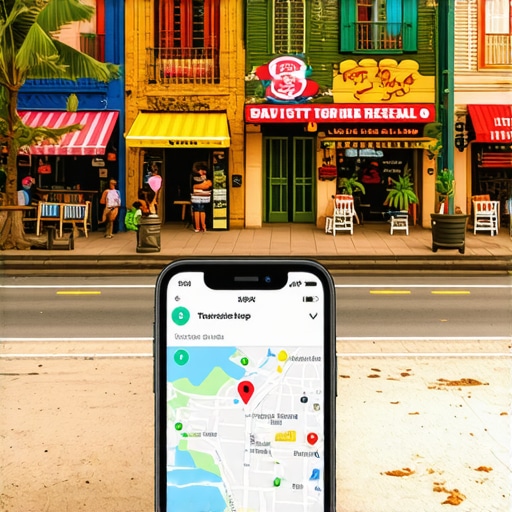
Imagine this: A potential customer is standing in the heart of Kaimuki, just three blocks from your storefront. They pull out their phone and search for exactly what you sell. You’ve invested in your shop, you have a sign on the door, and you’ve even set up a Google profile. But when the search results load, your business is nowhere to be found. Instead, Google suggests a competitor located three miles away in Ala Moana. This isn’t just a minor annoyance; it’s a “Proximity Paradox” that is costing Hawaii business owners thousands in lost revenue every month.
As a google business profile seo expert, I see this daily. Business owners assume that if they are physically close to a searcher, they will automatically appear at the top of the Map Pack. Unfortunately, the algorithm doesn’t work on a simple “as the crow flies” basis. Local SEO isn’t just a digital layer of marketing; as my colleague and industry expert Rashid Rehman often says, “It’s infrastructure.” If your digital infrastructure is cracked, your visibility will crumble, no matter how close you are to your customers.
The Proximity Paradox: Why “Near Me” Doesn’t Always Mean “You”
To understand why you’re invisible, we have to look under the hood of the local search algorithm. Google relies on three primary pillars to determine who gets those coveted top three spots in the Map Pack: Proximity, Relevance, and Prominence. While proximity is arguably the strongest signal, it is not an absolute tie-breaker. If Google isn’t 100% sure what you do (Relevance) or doesn’t think you are a trusted authority in your niche (Prominence), it will bypass your shop for a “stronger” result further away.
This is where many Honolulu businesses struggle. For example, many local contractors operate as a “Service Area Business” (SAB). They work out of a home office in Pearl City but serve all of Oahu. If you haven’t configured your profile correctly, Google may hide your “red pin” to protect user experience, effectively making you invisible to someone searching in Kapolei. This lack of a physical storefront signal can drastically reduce your “local reach” if your relevance signals aren’t perfectly tuned.
Furthermore, the “Proximity Paradox” is often exacerbated by Why Your Business Address Isn’t the Only Factor in Honolulu Map Success. You could be in the same building as the searcher, but if your profile is plagued by data inconsistencies or a lack of localized content, Google’s “trust filter” will prioritize a business that has clearly defined its service boundaries and local authority.
The Infrastructure of Invisibility: Common Technical Failures
If you want to rank google business profile listings effectively, you must first address the technical rot that keeps profiles hidden. The most common reason a shop five minutes away isn’t showing up is a failure in the foundational setup. I often encounter profiles that are either unclaimed, unverified, or – worse – suspended without the owner even realizing it.
One major red flag for Google is the use of “shady” address tactics. In an attempt to appear “local” to downtown Honolulu, some businesses use virtual offices or P.O. boxes as their primary address. Google’s AI is incredibly sophisticated at cross-referencing addresses against known co-working spaces and mail drops. If you are caught using a virtual office on Bishop Street when your actual operations are in Waipahu, your profile will likely be filtered out of the results or suspended entirely. To identify these issues before they tank your rankings, I highly recommend using a google business profile audit tool to check for compliance and data health.
Another technical failure is the “Category Mismatch.” Google offers thousands of primary and secondary categories. If a dentist in Manoa selects “Medical Clinic” as their primary category instead of “Dentist,” they are competing in a much broader, more difficult pool. This confusion dilutes your relevance, telling Google that you aren’t the *most* relevant answer for a specific “dentist near me” query, even if you are the closest.
Why Mainland SEO Strategies Fail Hawaii Businesses Every Time
I’ve seen it a hundred times: a Hawaii business hires a big agency from the mainland, and six months later, their traffic has actually dropped. Why? Because Why mainland SEO strategies fail Hawaii businesses every time is rooted in a fundamental misunderstanding of our unique geography. Mainland SEO is often built for flat, sprawling suburbs where a 10-mile radius is a standard service area. In Hawaii, 10 miles could mean crossing a mountain range or dealing with the H-1 at rush hour – factors that fundamentally change how locals search.
Google’s local algorithm is increasingly “hyperlocal.” It understands that a resident in Kailua is unlikely to drive to Waianae for a cup of coffee, even if both are technically in “Honolulu County.” Mainland strategies often target broad terms like “Honolulu Plumber,” but the real money is in neighborhood-specific intent. If your google maps ranking service doesn’t account for the “Island Effect” – the way the ocean and mountains create natural search boundaries – you are wasting your budget. You need hyperlocal seo that speaks to the specific valleys and coasts where your customers actually live and work.
The “Invisible Code”: Leveraging Schema and Hyperlocal Signals
To bridge the gap between your physical location and Google’s digital map, you need to use “The Invisible Code.” This refers to Local Business Schema – a type of structured data that tells search engines exactly where you are, what you do, and what neighborhoods you serve. Without this code, Google is essentially “guessing” your service area based on your website text.
One of the most effective tactics for Hawaii-based service providers is The Invisible Code That Pushes Honolulu Businesses to the Top of Maps. By embedding an interactive map on every service page – specifically tailored to the neighborhood that page targets – you send a massive localized signal to Google. For instance, Why Placing an Interactive Map on Every Service Page Boosts Ranking for Hawaii Roofers is a strategy that works because it confirms to the algorithm that your business is active and relevant in that specific zip code.
Implementing geo targeted seo and city page seo isn’t just about mentioning the name of a town. It’s about creating a cluster of signals – schema, map embeds, and localized content – that prove you are the local authority. When these signals are strong, Google is much more likely to show your business to that customer five minutes away, because the “Relevance” and “Prominence” pillars are finally supporting your “Proximity.”
Engagement Signals: Moving Beyond Just Having a Profile
Once your infrastructure is solid, you have to deal with the “Conversion Gap.” I often talk to clients about Why Your Hawaii Business Profile Gets Thousands of Views but Zero Calls. Usually, it’s because the profile is a ghost town. To improve google maps ranking, you need active engagement signals. Google isn’t just looking at your address; it’s looking at how often people interact with your profile.
Reviews are the lifeblood of google map pack ranking factors, but it’s not just about the star rating. The *content* of the reviews matters immensely. When a customer leaves a review saying, “Best ac repair in Honolulu,” they are helping you rank for those specific keywords. Furthermore, your response time is a ranking signal. Utilizing The Review Response Strategy That Actually Moves the Needle for Hawaii Map Rankings involves responding to every review within 24 hours and naturally incorporating local landmarks or service terms in your replies.
Photos also play a massive role. Profiles with high-quality, frequently updated photos receive significantly more clicks. In Hawaii, this means showing your team on-site at recognizable local spots. This visual proof confirms your “localness” to both the user and the AI, further cementing your local search visibility.
2026 Survival: Beating the AI Map Filters
As we look toward the future, the landscape of local search is shifting. By 2026, AI-driven map filters will be the primary gatekeepers of the Map Pack. Google is becoming incredibly adept at spotting fake engagement, “keyword-stuffed” business names, and artificial backlink profiles. To survive, you must move away from “tricks” and toward genuine local authority. To stay ahead, you need the right local seo tools to monitor your “share of voice” across the islands.
The upcoming AI filters will prioritize businesses that demonstrate “Real World Authority.” This means having a consistent NAP (Name, Address, Phone) across the entire web, which can be managed using The Small Address Tweak That Finally Fixed a Local Store’s Map Visibility. It also means using advanced local seo ranking tools to track how your rankings fluctuate block-by-block, rather than just city-by-city. To truly future-proof your business, you should implement 5 Hawaii Local SEO Tactics to Beat AI Map Filters in 2026, focusing on video content, local voice search optimization, and direct-to-map messaging.
Conclusion: Reclaiming Your Local Dominance
If a customer five minutes away can’t see you, your business is essentially invisible. Reclaiming your spot in the Map Pack requires a four-step approach:
- Audit: Use a google maps seo tools to find out where your profile is failing.
- Fix Infrastructure: Clean up your categories, verify your address, and eliminate data inconsistencies.
- Localize: Use schema and hyperlocal content to prove your relevance to specific Hawaii neighborhoods.
- Engage: Build a review and photo strategy that signals to Google you are an active, trusted business.
Local SEO is a marathon, not a sprint, especially in a unique market like Hawaii. If you’re tired of seeing your competitors take the lion’s share of local calls, it’s time to stop guessing. Whether you choose to perform a manual audit or hire a professional google maps ranking service, the goal is the same: making sure that when someone in your neighborhood looks for help, yours is the first name they see. Don’t let the Proximity Paradox keep your business in the dark. It’s time to fix your digital infrastructure and dominate the map.